
Improving Alignment and Fostering Connection for Educators to support Heritage Language Learning from K to 16, and Beyond
When: January, 30th, 2027 | 9:00am-12:30
Where: Online (Zoom)
We are pleased to announce the 2027 Heritage Language Symposium. This year’s theme is Improving Alignment and Fostering Connection for Educators to support Heritage Language Learning from K to 16, and Beyond. Please join us for interesting presentations and discussions from educational leaders and researchers from K-12, higher ed as well as community education programs.
Please check back soon for a detailed schedule and registration form. There will be no cost to attend.
Sponsored by: The UW Language Learning Center and the Washington State Office of Superintendent of Public Instruction (OSPI) World Language and Language Access Program
Keynote
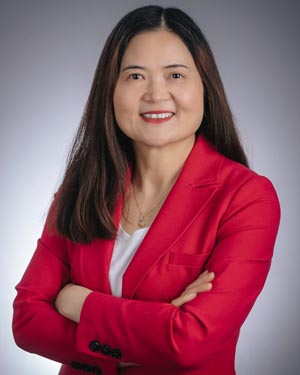
Presenters
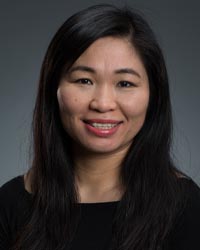
Dr. Chan Lü
Identifying the Gap between Research and Practice for Heritage Language Learning
Dr. Lü will share about a current research project involving a scoping review of research on Chinese as a heritage language. The findings will help identify the gap between research and practice.
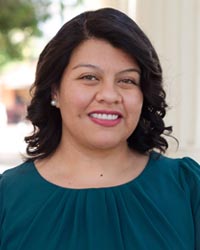
Dr. Angélica Aamezcua
New Resources to Support Heritage Language Educators, Learners and other Stakeholders
Dr. Aamezcua will be sharing two new resources. One is an Open Educational Resource (OER) on Spanish Heritage Learning.
The other is a book about the seven most common myths about heritage language education which debunks commonly held beliefs that educators and other stakeholders may have about heritage language learners (HLLs), their bi/multilingualism, their language learning process, and the aims of heritage language (HL) education. The goal is to inform readers by presenting recent research and best pedagogical practices for teaching HLLs their heritage language in an educational setting.
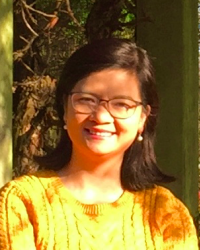
Dr. Bich-Ngoc Turner
Beyond the Classroom: Community-Based Performance Assessment as a Bridge for Heritage Language Learning
Heritage-language learning should not be conceptualized as a linear progression from classroom to achievement or proficiency test. It can be conceptualized as a movement among classroom, family, community, and future educational and work contexts. The community interview (graded) task creates a bridge among these spaces.
If you are interested in learning about previous year’s symposia, please visit here.