
Amharic
Amharic is a language spoken in the Horn of Africa (HOA), which is a crucial region in the political economy of Africa, Europe, and Asia. Positioned on the western side of the Red Sea, it lies along one of the world’s major trade routes. The HOA has historically been a melting pot of diverse peoples from Africa, Europe, and Asia, contributing to its unique and vibrant human history.
Program Overview
The Horn of Africa, where Amharic is spoken, is a region which is recognized as one of the earliest homes of humanity, with archaeological evidence suggesting that human beings first lived here before migrating elsewhere. For those interested in archaeology, the HOA is a gold mine of discoveries. Its rich history of state formation and literary traditions also make it an invaluable resource for scholars of history and literature. The region’s ethnolinguistic diversity is equally compelling, attracting many anthropologists and linguists eager to study its unique cultures and languages.
Religiously, the HOA is characterized by profound diversity. For centuries, it has been a home to Judaism, Christianity, and Islam, each of which has developed distinct local expressions. The interaction between these major world religions and indigenous belief systems has created a richly unique religious and cultural milieu that continues to fascinate scholars.
Study Abroad
Course Information
Course Catalog
- AMHAR 101 Elementary Amharic I
- AMHAR 102 Elementary Amharic II
- AMHAR 103 Elementary Amharic III
- AMHAR 511 Elementary Amharic I
- AMHAR 512 Elementary Amharic II
- AMHAR 513 Elementary Amharic III
Faculty's Recent Research
- Two Hundred Täˀammərä Maryam (Miracles of Mary) Stories, ed. Wendy Laura Belcher, Jeremy Brown, Mehari Worku, Dawit Muluneh. Princeton: Princeton Ethiopian, Eritrean, and Egyptian Miracles of Mary project. pemm.princeton.edu.
- Worku, Mehari. “The language of the smart: Sociolinguistic and linguistic features of the Amharic urban youth language.” Ebongue, Emmanue and G. Atindogbe Eds. Linguistic and Sociolinguistic Perspectives of Youth Language Practices in Africa: Codes and Identity Writings. Langaa RPCIG, 2019.
- How Multilingual Policies can Fail: Language Politics among Ethiopian Political Parties. In African Linguistics on the Prairie: Selected Papers from the 45th Annual Conference on African Linguistics. Major Travis et al. (eds.). Germany, Language Science Press, 2018. Download PDF
- Mary in the Poetic Theological Works of the Syriac Tradition: A study on Ephrem the Syrian, Jacob of Serugh and Narsai of Nisibis. In The Alexandria School Journal. Alexandria: Agora University Press, 2021.
- 15th-century Ethiopian Orthodox Ecclesiology in Giyorgis of Sägla’s Mäṣhafä Məsṭir, Washington DC, Catholic University of America (Unpublished dissertation)
- Zara Yaqob and Walda Heywat. 2023. The Hatata Inquiries: Two Texts of Seventeenth-Century African Philosophy from Ethiopia about Reason, the Creator, and Our Ethical Responsibilities. Translated by Ralph Lee, Mehari Worku, Wendy Laura Belcher, and Jeremy R. Brown. Berlin: Walter de Gruyter GmbH.
More About Amharic
 Global
- 60,001,030 speakers (as L1: 34,883,130; as L2: 25,117,900)
- There are about 95 different ethnolinguistic groups in the Horn of Africa
 Learning
- Amharic is one of the oldest living languages in the world.
 Culture & Diplomacy
- 2nd most widely spoken Semitic language in the world after Arabic.
 Travel & Career
- Offers career opportunities in healthcare, education, technology and government.
Discover More of the Horn of Africa
-
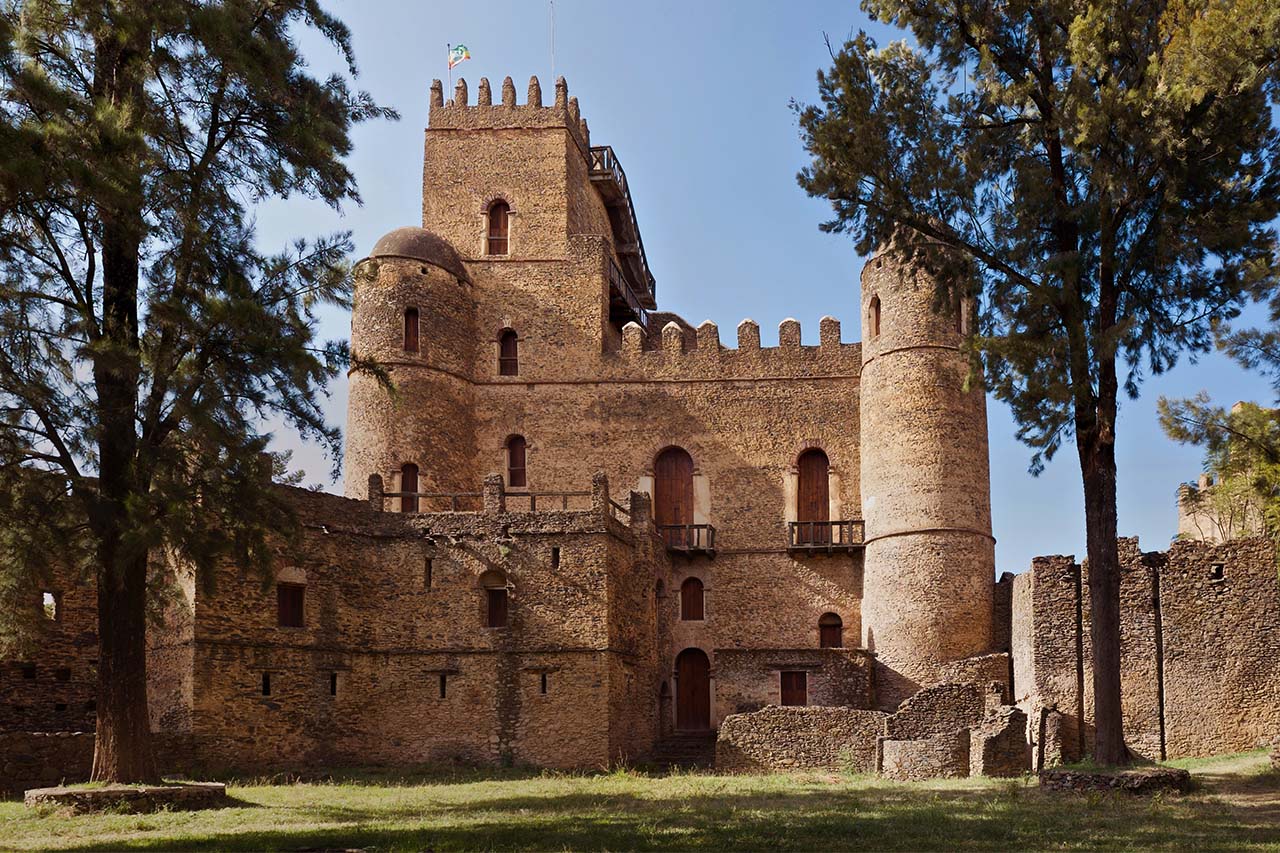
Fasiledes, Ethiopia A photo of a castle with some trees
-

A skateboarder performing an ollie in front of a skyscraper in Addis Ababa, Ethiopia
-

White sand beach
-
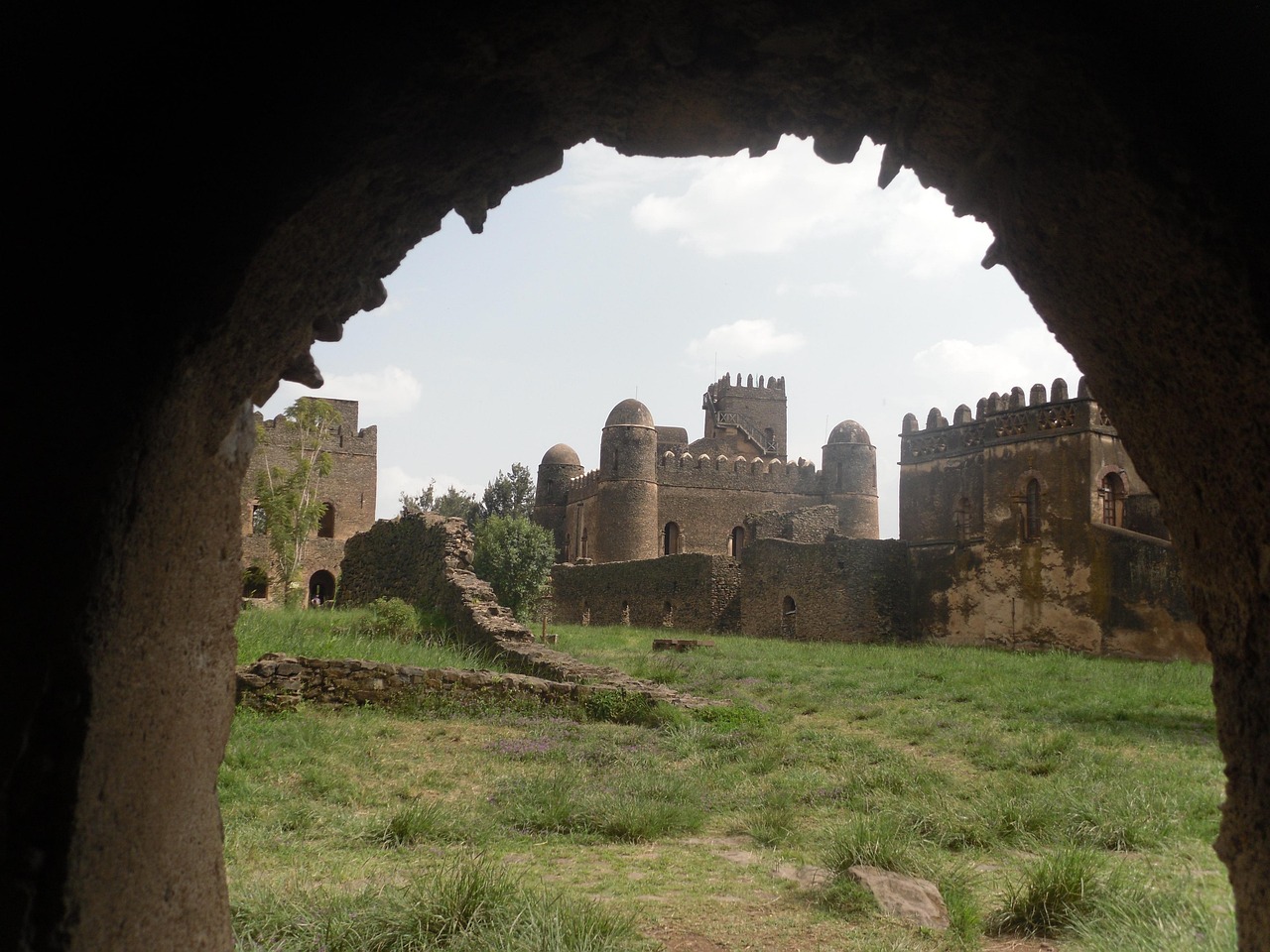
view of a castle
View of Gonder Castle